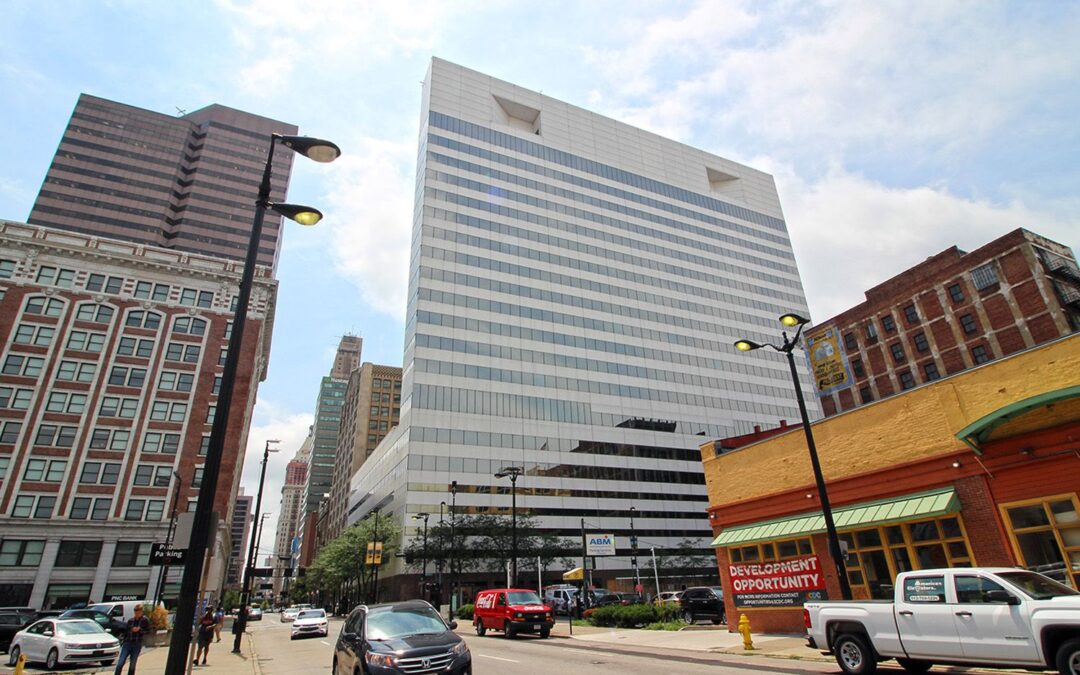
A skyline can change without losing its history. Across downtown Cincinnati, underused office buildings are getting a new purpose, as apartments, hotels, and places that bring more life to the city center.
The shift reflects a practical challenge and an opportunity. Remote and hybrid work have put pressure on office demand, leaving some older buildings underused. At the same time, Cincinnati needs more places to live and stay. This fall, reporting noted that more than 1,600 residential units had been completed through downtown office conversions, with roughly 3.2 million square feet under conversion. Cincinnati is regularly described as a national leader in this work.
These projects show how adaptive reuse commercial real estate can do more than rescue an overlooked building. With thoughtful planning, it can create homes, welcome visitors, support neighborhood businesses, and reconnect downtown blocks.
Why Cincinnati’s buildings are finding new roles
Many older downtown buildings were designed around windows, street access, and architectural details that remain valuable today. Their original use may no longer fit the market, but the structure itself can still offer a strong foundation for a new chapter.
Housing and hospitality are two promising alternatives. Apartments bring residents who use downtown throughout the week, while hotels welcome visitors and create activity around restaurants, cultural destinations, and local businesses. In both cases, successful repositioning commercial assets starts with asking what the building, and its location, can serve next.
The numbers tell part of the story. The buildings tell the rest.
The residential wave: offices becoming homes
7 West 7th: from headquarters to neighborhood
The former Macy’s headquarters tower on West 7th Street reopened as 7 West 7th Apartments in April 2025. The conversion created 341 apartments, most with one or two bedrooms. Rents are roughly $1,500 to $2,600 a month, with some penthouses above $5,000.
The building’s eighth-floor sky lounge, fitness center, and outdoor terrace give residents shared places to gather and unwind. A 30-year tax exemption approved by City Council supported the project. At its opening, Mayor Aftab Pureval described the city’s goal as moving downtown “from being almost exclusively a commerce center to a real neighborhood.”
That ambition reaches beyond one address. When people live downtown, they can support nearby shops and restaurants and add everyday activity to streets that once quieted after business hours.
Atlas Building: homes, local business, and affordability
At 530 Walnut Street, a 10-story building that once housed Atlas Bank is being converted into 67 housing units and more than 12,000 square feet of commercial space, including longtime tenant Urbana Coffee. The $22.8 million project includes affordable housing, with about half of the units planned at 60% and 80% of Area Median Income.
Work began in late October 2026. Financing includes $2.9 million from the Downtown/Over-the-Rhine East TIF fund, approved unanimously by City Council in October 2026, and $5 million in Ohio Historic Rehabilitation Tax Credits.
The Atlas project illustrates how a conversion can make room for both new residents and an established neighborhood business. That mix helps connect a building’s next chapter to the community around it.

Atrium One: another tower in the pipeline
Atrium One is moving forward with an adaptive reuse plan valued at about $76 million. The project is expected to add roughly 190 apartments, with completion targeted around late 2028. It adds to a growing pipeline, and reinforces that downtown’s future is taking shape one building at a time.
The hotel wave: welcoming visitors into historic spaces
Residential use is not the only way to bring an underused office building back to life. Hotels can also give prominent downtown properties a new role, connecting visitors with Cincinnati’s restaurants, events, and historic streets.
Fidelity Hotel: a landmark with a new purpose
The 14-story Gwynne Building at 602 Main Street was built in 1913 and formerly served as Procter & Gamble headquarters. It reopened as the Fidelity Hotel in July 2026 following an $81 million adaptive reuse by Denver-based NuovoRE and hotel developer New Waterloo.
The hotel has 165 rooms and two restaurants, Cora’s Cafe and Gwynne, led by local chef Brad Bernstein. The project brings a major historic building back into active use while creating a hospitality destination with a strong local identity.

Duttenhofer Building: office floors planned for hotel stays
The former P&G Duttenhofer Building at 299 East Sixth Street is being converted into a 130-room Hilton Garden Inn. Keystone Hotel Group and Sun Cos. are leading the roughly $31.8 million project, supported by about $3.15 million in Ohio historic tax credits. Completion is expected around the end of 2026.
Cincinnati Club: a planned boutique hotel
The Cincinnati Club building overlooking Piatt Park is planned as a $55 million, 150-room boutique lifestyle hotel under Marriott’s Series brand. Sunflower Development Group is leading the project, its first in Cincinnati. Construction is expected to begin in early 2027, with completion around 2028.
The plan shows how redevelopment can evolve as a project team tests the best use for a distinctive property and its setting.

A related downtown revival: Garfield Suites
Not every downtown reuse is an office-to-hotel conversion. The Garfield Suites Hotel, a 16-story building that sat vacant for about a decade, was purchased by 3CDC in April 2026. The organization envisions a mixed-use development and views the building as an important connector between the Fountain District, Court Street Plaza, and Over-the-Rhine.
It is another reminder that revitalization is about more than a single building. A well-considered project can help stitch together nearby destinations and encourage people to move through downtown.
What makes a conversion work?
A striking exterior is only the beginning. Before a building can welcome residents or hotel guests, the project team must test whether its structure, systems, and approvals can support the new use.
Key questions include:
- Can people get daylight? Floor plate depth and window access affect whether interior spaces can work comfortably as homes or guest rooms.
- Can building systems be adapted? Plumbing and mechanical systems need to support the new layout, and the location of existing service stacks can shape what is practical.
- Can the project’s costs be supported? Historic tax credits, TIF financing, and other city incentives may help make a complex reuse feasible.
- Can the building meet current requirements? Entitlement, zoning, accessibility, fire safety, and building-code needs all require careful review.
There is no universal conversion template. Each property calls for a clear-eyed assessment of its condition, location, costs, and potential role in the community.
What the conversion boom means for owners and investors
For an owner with a struggling building, continued vacancy is not the only path forward. A property that no longer fits the office market may still hold value for a different use, or for a buyer with the experience and resources to pursue one.
For investors, the opportunity is compelling but requires discipline. The work begins with due diligence: understanding the building’s constraints, estimating the renovation scope, evaluating possible incentives, and identifying the right future users. Not every underused building is a conversion candidate, and early, informed analysis matters.
That approach is central to commercial real estate investment Ohio. W. Samaan Commercial Real Estate Group focuses on identifying overlooked assets and exploring how strategic improvements can help them thrive. For owners evaluating a property for sale, businesses looking for commercial space for lease, or investors considering a long-term operating plan, each decision should begin with the property’s real potential.
Once a property is active again, sound operations help protect that progress. Our commercial property management Ohio services focus on tenant relationships, maintenance, and value planning. Essential work in keeping a property useful and well cared for over time.
The same principles apply across the state, including in our Ohio service areas. Whether the opportunity involves redeveloping abandoned buildings Ohio or repositioning a property that is simply underperforming, the goal is to transform unused space into places people can use and communities can value.
A new chapter for downtown Cincinnati
Cincinnati’s conversions are more than construction projects. They are a chance to bring homes, hospitality, and new activity into buildings that might otherwise remain underused. Each completed or planned project adds another piece to a more connected, lived-in downtown.
If you own an underperforming commercial property or are exploring a value-add opportunity, let’s talk about what it could become. Text 937-806-7212 or visit creohio.com/contact-us to start the conversation.